Why Is Disney Doing Jungle Book Again
How Netflix's 'Mowgli: Legend of the Jungle' Bests Disney'due south 'The Jungle Volume'
These duelling films explore the Rudyard Kipling mythology in different ways, only but one captures the wild spirit of the source material.
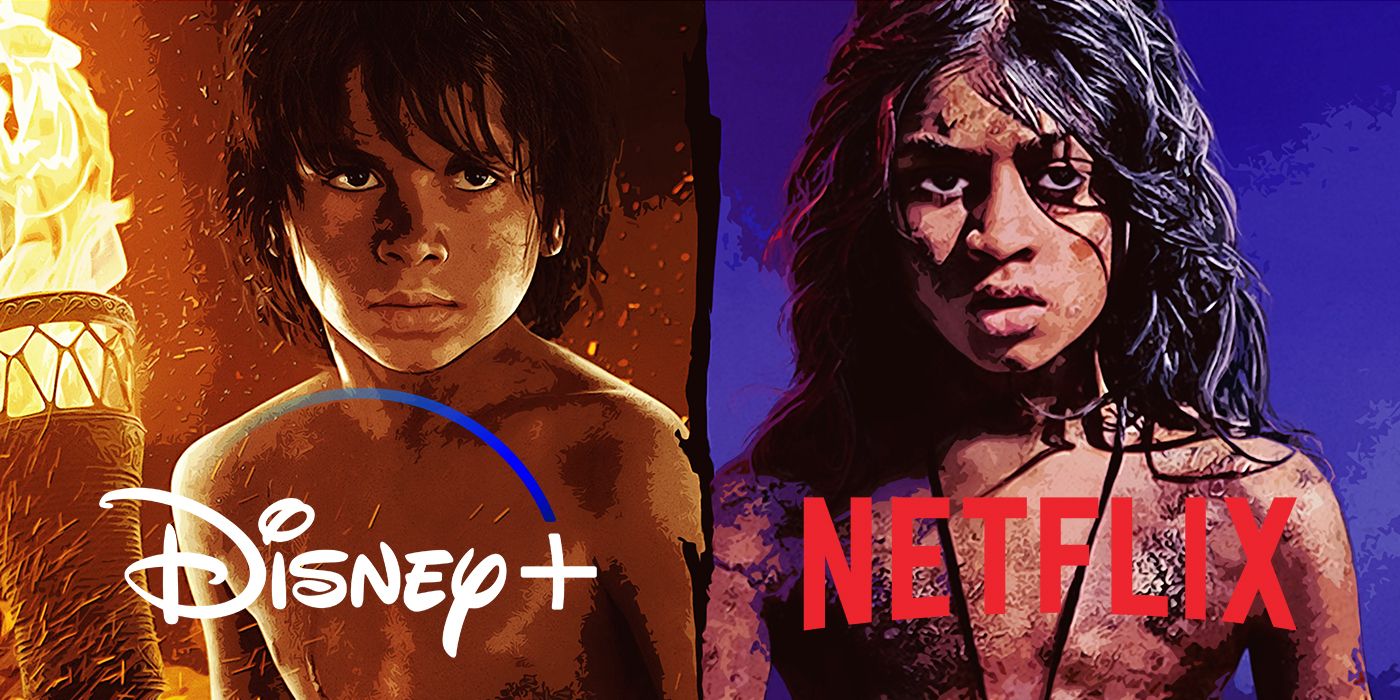
Disney's 2016 live-action remake of the classic 1967 The Jungle Book animated film honors its source cloth in some ways, but information technology also lacks something that many Disney films lack. The original 1967 animated movie, The Jungle Book, is itself a radical deviation from its own source textile, the 1894 collection of short stories past Rudyard Kipling.
Nevertheless, there is another adaptation of the original short story collection that turned out to be Disney's competition. The Warner Bros. movie, Mowgli: Legend of the Jungle (2018), sold to Netflix. Directed by motion-capture star Andy Serkis, this moving picture was initially announced long earlier Disney'south remake was confirmed, just Disney beat them to the dial and released its flick first, leading the Netflix motion-picture show to go tragically showered in groans of indifference from viewers and critics who felt they had seen information technology before.
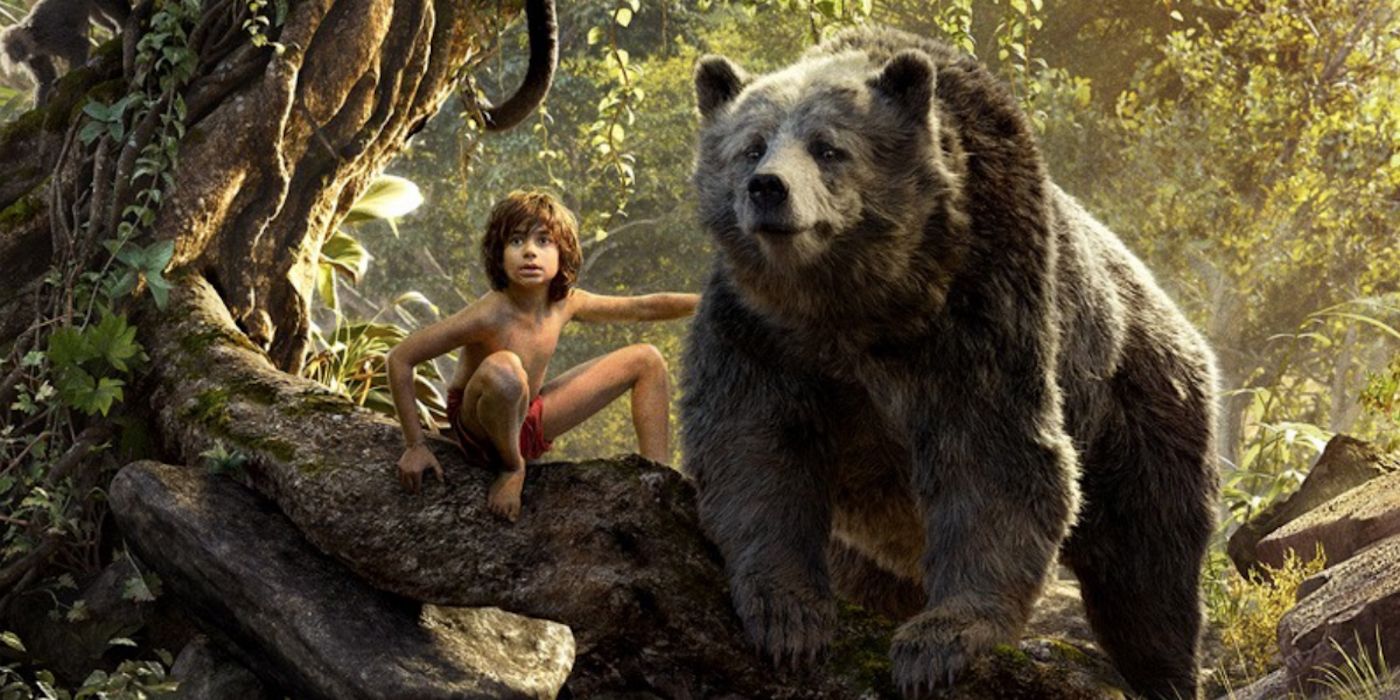
They had not. There are, of course, plenty of similarities with the Disney flick and Mowgli, mostly due to the remake taking more elements from the source material than the original blitheness did, but Mowgli is not the happy-get-lucky risk picture show the Disney competitor is. The Jungle Book is a Disney film, subsequently all, and Serkis' jungle ballsy is a much darker, scarier, and fifty-fifty disturbing take on the original Kipling anthology. So much so that it's arguably not even fit for kids. There is grit, violence, death, and fifty-fifty brutality in a mode that befits the original stories with serious, adult themes.
In that location is even i particular scene that probably left many kids traumatized. The jungle is harsh and unforgiving, filled with raw struggle and conflict referencing the vicious police force of the wild, which the Disney film just paid lip service to yet never embraced in its visceral celebrity. The animals that live within are truly animals, capable of cracking ferocity, threat, rage, and detest, but still somehow love and compassion through the turmoil and ruthlessness of nature. There is an nearly admirable quality of honor in this untamed world.
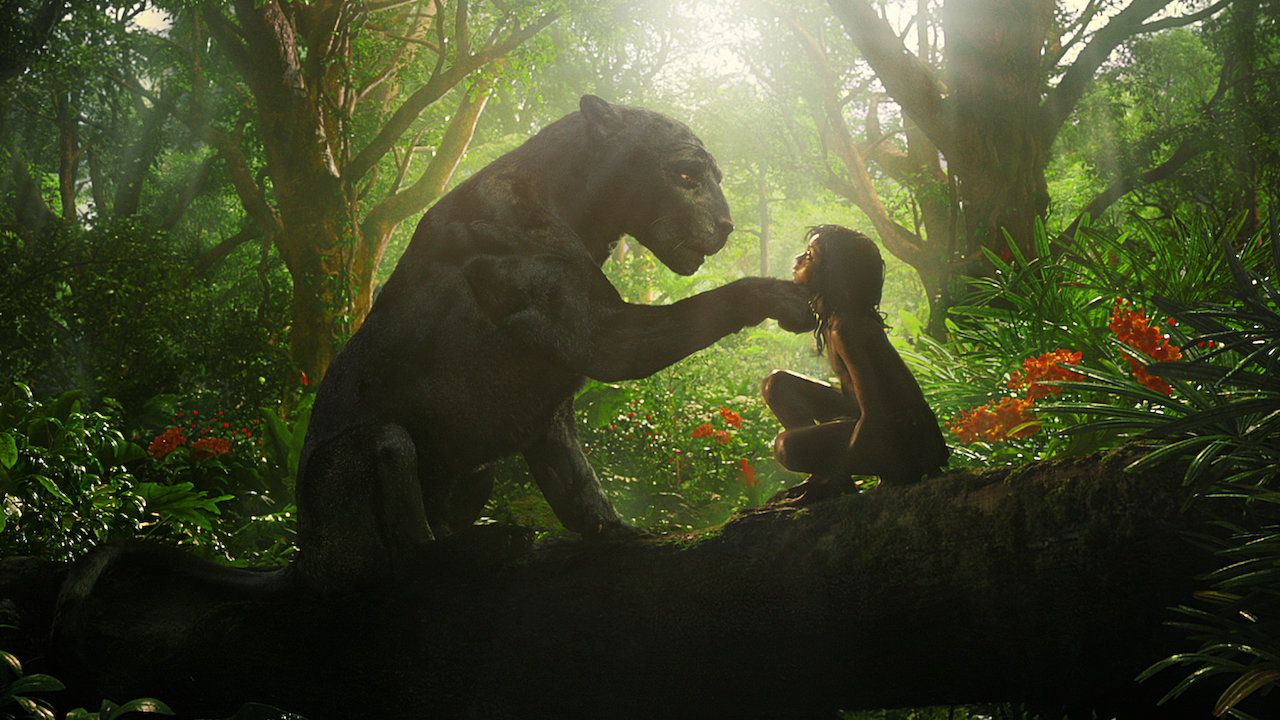
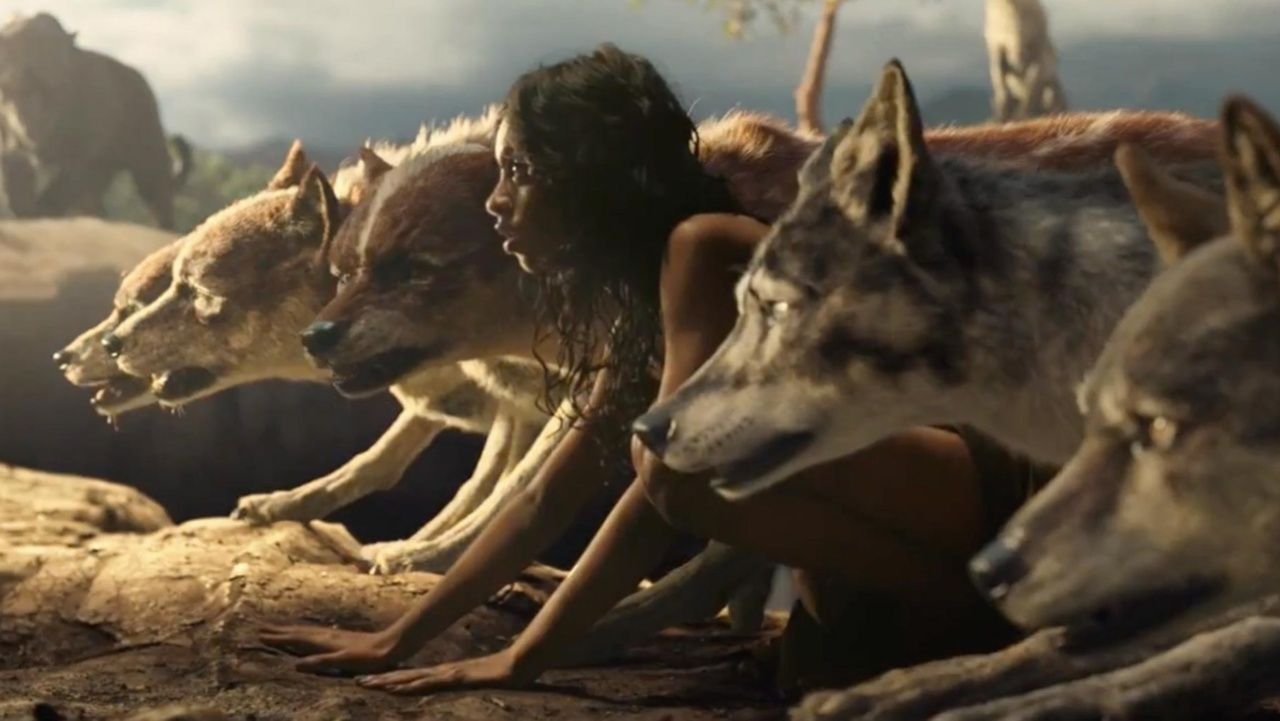
Mowgli feels more than in line with an old archetype. Rather than but being a beautiful risk story, it really feels similar something based on classical British literature from over a century ago. Part of that is in the characters themselves. While the Disney film devotes itself to creating realistic animals, it can suffer from the problems that plagued Disney's 2019 live-activity remake of The King of beasts King — animal characters failing to visually show human being emotion. Mowgli focuses on putting the humanity in the animals — sometimes to uncanny degrees — by emphasizing their emotion in expressive facial structures, sidelining realism to permit its talking animals to take their proper roles equally characters. You lot can likewise see the faces of the real actors backside the CGI, and that definitely gives them more personality.
The motion-picture show is held up by an all-star cast for its animal characters who somehow bring out the exceptional composure of these creatures. Every vox lent to the film'due south animal cast is quite assuredly British, which is exactly what a film based on classic Hindu-British literature needed.
- Christian Bale voices Bagheera, who somehow manages to hands replace Ben Kingsley in the office of the wise black panther with and then much more emotion. His relationship with Mowgli is less strict teacher and more protective older brother, and his character's backstory is more fleshed out than his Disney counterpart.
- The picture's ain director, Andy Serkis, also plays Baloo the bear, who is much more gruff with his stiff cockney accent and tough personality, serving more than as a drill sergeant character whipping the younger wolves into shape. He takes pride in his piece of work and his wolves.
- Benedict Cumberbatch is Shere Khan, who again demonstrates his unnatural affinity for voicing scary characters with growly voices, and plays the role with so much more savagery and menace than Idris Elba's more sophisticated villain, growling every give-and-take with apple-polishing hate.
- Cate Blanchett fittingly plays the even so-once again female person incarnation of Kaa the giant python, and different the Scarlett Johansson version, the character here acts as a storyteller and chronicler with a genuine fascination with the events taking place, rather than a random encounter pointlessly dumping exposition on her prey. In that location is a supernatural implication surrounding her mythical status in the jungle.
- Serkis' son, Louis Serkis, voices Bhoot, an original character. He is Mowgli's tremendously ambrosial albino wolf best friend, and his relationship with Mowgli based on their mutual abnormalities among their families serves to enrich both characters and inform Mowgli's growth subsequently on.
- Peter Mullan voices Akela, the leader of Mowgli's wolf family unit, who oozes ancient wisdom and also plays a much bigger and more emotional office than his brusque-lived Disney counterpart.
- Naomie Harris voices Mowgli's wolf mother who sadly plays a noticeably smaller office than her Disney counterpart, and even seems to get forgotten most the end. The film could have afforded to exist longer and mankind her out more than, particularly considering it was not even two hours, suggesting in that location may take been some stiff cut here and at that place.
- Last but not least, Rohan Chand plays Mowgli, and unlike Neel Sethi's portrayal in the Disney moving-picture show, Chand's take is a more feral version of the formerly squeaky-clean wild male child, throwing himself into the role with so much more than animalistic free energy. It truly shows that he was raised by wolves, and the movie even shows how this development took identify as we explore the jungle culture Mowgli grows up in. This also manifests in ameliorate acting that flawlessly pulls off a level of ferocity not normally found in most child actors. Different Disney's version, Chand'due south Mowgli is more flawed, more emotionally intense, and at times, more tragic. Not only that, he is as dirty and unkempt as a wild boy would be, whereas Chand'southward Mowgli looks clean, spotless, and visibly less like he belongs.
Of class, the pic is not perfect. A prime event is the articulate bulldoze to preserve the integrity of the original writing in some form or some other, which can make the dialogue sound awkward here and there. But then at that place are the grapheme designs. To bring a more human appearance to the characters, the animals have human-similar eyes and somewhat cartoony faces. While this works to the pic'south advantage most of the fourth dimension, it tin stand out similar a sore thumb. The VFX are definitely very noticeable in places, more often than not with the wolves. When viewers get from seeing one very real animate being like a domesticated cow to an obvious CG wolf seconds subsequently, it can easily intermission the immersion. High-resolution benefits these graphic symbol designs here to bring out the details. It is fascinating how Mowgli has the more realistic animals with less realistic VFX, whereas The Jungle Book has the more realistic VFX with the less realistic animals.
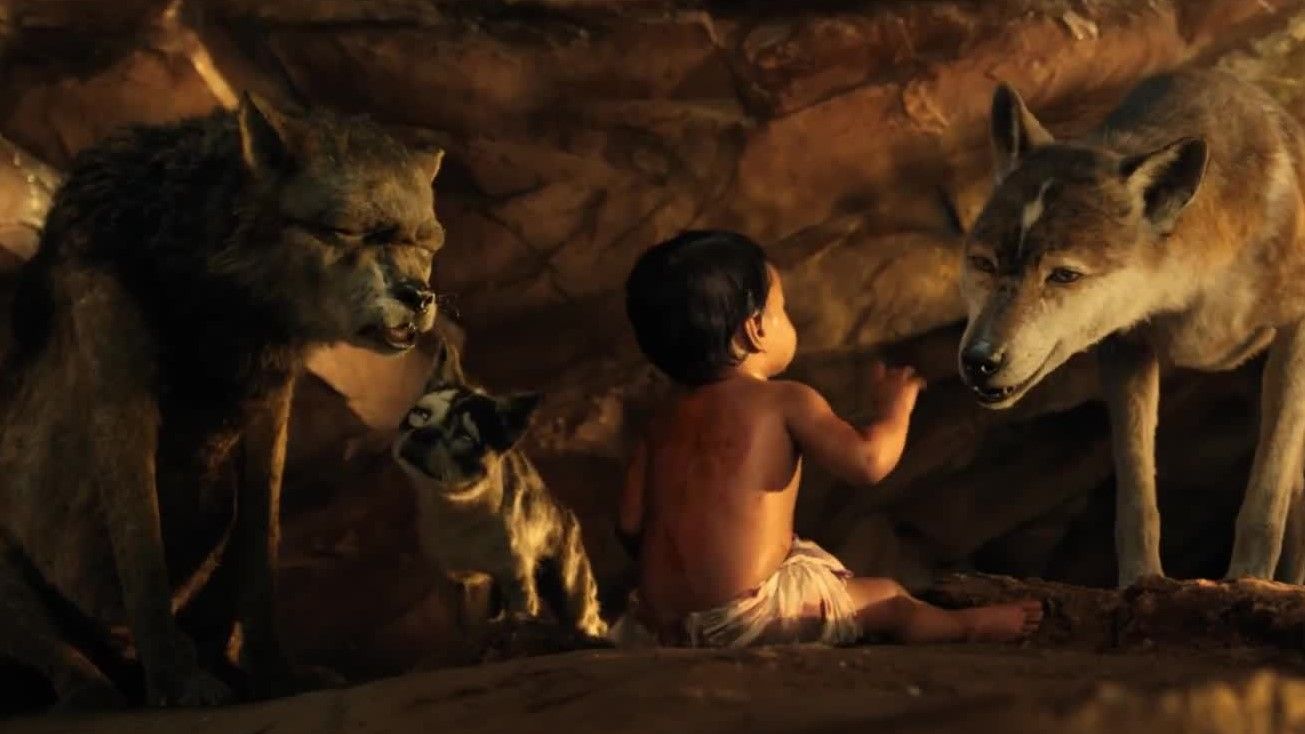
Only what the movie does practise better in terms of visuals is actuality. While it would be squeamish if the film were shot in Republic of india, it was filmed in South Africa, utilizing diverse real environments at times to create a far more conceivable setting, whereas the Disney motion-picture show was shot almost entirely on a studio soundstage. Mowgli has some real environments that a story like this really needed. Plus, fifty-fifty the CGI environments in the movie are beautiful, so it'due south a shame this realism could not be reproduced as often with all the animals.
Speaking of "real," in that location is a much greater accent on man, the other human being characters. This gives a beautiful look at traditional Indian civilisation, simultaneously calculation a welcome touch of realism to a story filled with CGI talking animals to encounter more than human being beings. Not to mention, these people also give the pic a not bad deal of heart as Mowgli spends time with them and embraces the man culture he never had, something he welcomes after fleeing from the jungle in shame when his utilise of burn down to drive away Shere Khan earns him the fright of the wolves.
However, the film invites the viewer to question how humanity compares to the ruthless wild. Is it equally pleasant every bit it seems? Or does this earth have monsters too? The film manages to explore this without demonizing human's world at the expense of Hindu cultures like the Disney remake does with its well-nigh supernatural and demonic delineation of culture equally something terrifying and overwhelming.
The only result here is perhaps with the British hunter John Lockwood, named after Rudyard's male parent John Lockwood Kipling, portrayed as a drunk and a gleeful killer of animals for sport (something we are told is an affront to the law of the jungle) who meets an untimely demise by the cease of the movie. This motility was less than respectful when the real human was far from the grapheme he is depicted equally. An unnecessary ingredient, since the hunter was named Buldeo in the book.
While nothing legendary, the film'due south soundtrack is definitely more impressive too with its stronger Hindu cultural influence layered throughout, giving the film so much more personality, rather than merely being some bombastic activity score. The Disney film does get the iconic songs, but that is an apples and oranges comparing since this movie is no feel-good musical. All these aspects and more than give the flick a unique personality making it stand out in comparison to Disney'southward more than distinctly "American" accept on the Indian tale.
The inherent nature of the 1890s original stories, especially regarding the mode of the writing, makes it incompatible with the cinematic medium — even more than then for modern audiences — without taking liberties in the translation. Although, it is much closer to the legend than the Disney motion-picture show and easily the preferable sentinel for fans of the source textile. If you lot tin get over the way the animals sometimes look and the undeservedly curt length, it is assuredly a richer, more nuanced, and more than interesting film.
Had this movie been more successful, it might have gear up a precedent for more authentic adaptations of the original stories that the classic Disney animated films are based on, making Netflix or Warner Bros. interesting competitors to Disney and their modus operandi of remaking prior inaccurate adaptations in live-action. For instance, Victor Hugo's 1831 novel The Hunchback of Notre-Matriarch, or Daniel P. Mannix's The Fox and the Hound (1967), breaking free from the "Disney-fication" of these classics by adapting them with all their gritty heart and soul.
About The Author
Source: https://collider.com/netflix-mowgli-legend-of-the-jungle-bests-disney-the-jungle-book/
0 Response to "Why Is Disney Doing Jungle Book Again"
Post a Comment