Can Floppy Baby Symdrome Prevent You From Palying Sports

- Books
- Adapted Sports Journal Digest
- Care Pathways
- Central Hypotonia
- Dystonia in Cerebral Palsy
- Early Detection of Cognitive Palsy
- Hip Surveillance in Cerebral Palsy
- Osteoporosis in Cerebral Palsy
- Sialorrhea in Cognitive Palsy
- Developmental Medicine & Child Neurology
- Newsletter
 Fundamental Hypotonia
- Section I: Evidence Summary
- Section Two: Selected Published Testify
- Section III: Practical Tools
- Section IV: Acknowledgments
- Linguistic communication/
Translations - Feedback/
Comments
Section I: Prove Summary Printer Friendly Version
A. Definitions
Hypotonia can be divers equally abnormally low muscle tone, or reduced resistance to passive, relatively rapid movement. The imprecision of the definition reflects the lack of psychometric properties and reliability of assessments for hypotonia, therefore just clinical definitions currently in utilize past neurology specialists will be used in this pathway. Other terms for hypotonia include, just are not limited to, cardinal hypotonia, floppy babe syndrome, benign built hypotonia, and neonatal hypotonia.
Hypotonia may originate from disturbances in the physiology of central or peripheral nervous systems or of the end organs themselves (muscles and muscle groups). The current pathway will just accost children whose hypotonia is centrally-mediated and will exclude those whose hypotonia can be attributed conclusively to peripheral causes. Spinal Muscular Atrophy (SMA) is not included within the definition of centrally mediated hypotonia. Centrally-mediated hypotonia volition be further referred to in this certificate as "fundamental hypotonia" in the involvement of simplicity. Specific etiologies of key hypotonia include brain insults and malformations, likewise as genetic, metabolic, traumatic, anatomical, or idiopathic causes of primal neural dysfunction.
Key hypotonia may be generalized and bear upon the limbs, trunk and neck or may be localized such that specific areas of the body are predominantly hypotonic with others having normal or hypertonic characteristics. Hypotonia is often seen in combination with muscle weakness. In the instance of perinatal insults to white thing tracts, such as in encephalopathy of prematurity and neonatal encephalopathy, central hypotonia can evolve over the form of the offset few years of life and progress to hypertonia. In addition, cardinal hypotonia tin can co-be with abnormalities of movement (such as clutter or dyskinesia) or sensation (dysethesias, paresthesias).
B. Why is Therapeutic Assessment and Intervention Important for Children (historic period 0-6 years) with Central Hypotonia?
Infants and immature children with diagnoses of Down's syndrome (DS), Cerebral Palsy (CP), and/or developmental delay (DD) often present with depression muscle tone that can influence their gross motor evolution. Other children presenting to therapists may have no established diagnoses.
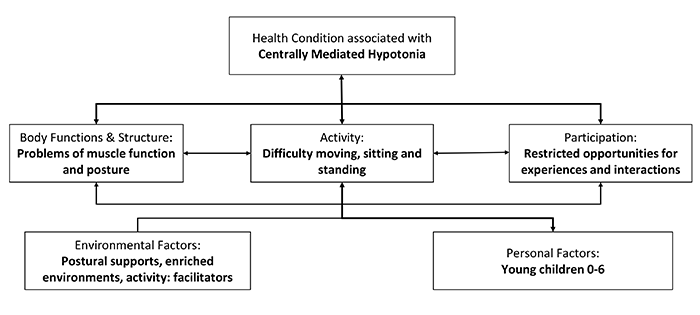
- Central hypotonia can impede motor function through decreased joint stability, joint hypermobility, weakness, and/or decreased activity and endurance.
- Dumb motor function can be associated with reduced developmental experiences in turn altering typical progression of gross and fine motor abilities.
- Key hypotonia can interfere with ability to reach positions and acquisition of developmental milestones.
- Hypotonic postures tin interfere with functional activities such as reaching, sitting, continuing and crawling/walking, which can atomic number 82 to participation restrictions.
- Central hypotonia, in combination with muscle weakness, can interfere with sleep by limiting ability to change position during rest: this can contribute to discomfort and poor slumber quality.
- Key hypotonia tin result in reflux and/or constipation due to abnormalities in coordination of voluntary and involuntary musculus function.
- Hypotonic postures and depression muscle activity can create challenges for care-giving and participation in daily life activities.
- Children with key hypotonia tin can have drooling and feeding problems (eastward.g. chewing or swallowing).
C. Target Population
Children from nascency to vi years-of-age with central hypotonia and gross motor delays that limit activity and participation.
D. Target Clinical Providers
Therapists/Early Interventionists caring for children from nativity to six years-of-age with central hypotonia and their families.
Due east. Assessment
If the child has non already been seen for a diagnostic work-up, referral to a neurologist, geneticist and/or developmental medical specialist is always recommended. During the therapy cess, make up one's mind the impact of the hypotonia on part, activity limitations and participation restrictions, pain/comfort (including sleep), intendance-giving and whether management is required. Assess whether the clinical presentation is consistent with infants at "high adventure of CP" (run across Early Detection Guidelines, JAMA Pediatrics Novak et al. 2017).
Therapy Cess: Children with hypotonia may have delays in motor development. It is recommended that therapists use valid and reliable measures of motor abilities. As there are no established show-based approaches to measure hypotonia, and equally the focus of therapy should be on improved performance, we recommend the following: utilise motor function assessments with good psychometric backdrop for infants at high risk for motor delays and neuromotor problems such as: the Hammersmith Infant Neurological Test (HINE, 3 to 24 months), the Examination of Infant Motor Performance (TIMP, term to three months), Peabody Developmental Motor Scales (PDMS), Development Cess of Immature Children (DAYC-ii) Motor Scale, the Alberta Infant Motor Calibration (AIMS, 0-18 months), Brigance 3, etc. (Encounter Early Detection Guidelines for CP, JAMA Pediatrics Novak et al., 2017). A broader perspective on promoting child evolution is offered by the 'F words in childhood disability' (Rosenbaum & Gorter, 2012)
Goal Setting: Apply valid and reliable effect measures outcomes such as Canadian Occupational Operation Measure (COPM), Goal Attainment Scaling (GAS) (see Department Iii for further details).
F. Management
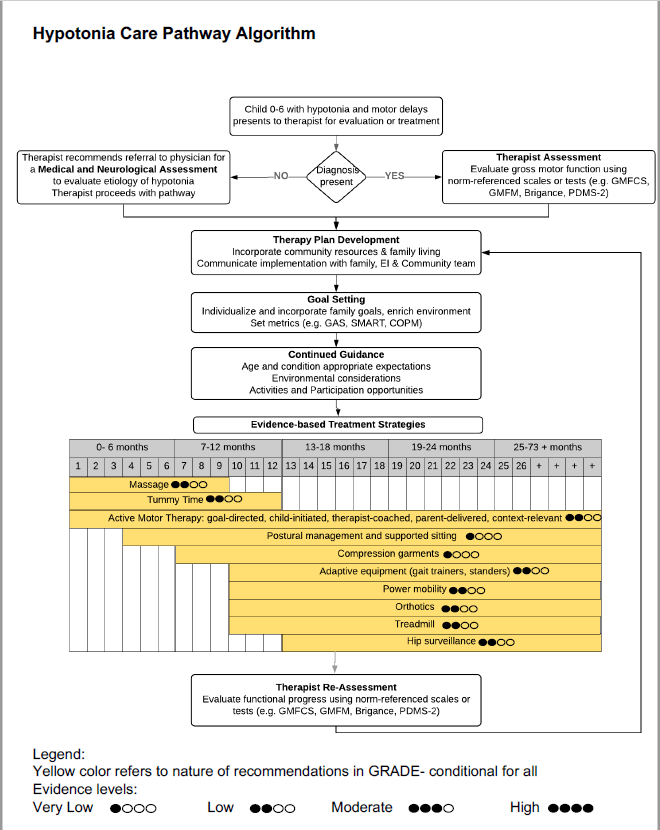
Nearly of the interventions in the Central Hypotonia Care Pathway have low or very low levels of evidence (based on Form ratings).
Developmental Strategies: strategies used by physiotherapists (PTs), occupational therapists (OTs) and early interventionists are considered cornerstones in the direction of central hypotonia. General principles include:
- ensure therapy is goal-directed and promotes function and participation in daily activities/routines.
- ensure all motor interventions are child active.
- activities should be child-initiated and child-directed.
- activities should be caregiver delivered when possible.
- optimize seating and upright positioning with good stability/support as early on equally possible (providing opportunities for reach/grasp and manipulation to learn through play).
- avoid extreme positions (e.g. frog-legged (hip/human knee flexion with abduction)) and strive for symmetry.
- consider orthoses and splints to increase foot stability in stance and weight begetting.
- encourage early mobility using various typical, adapted and specialized equipment.
- motorbus parents to integrate therapeutic interventions for hypotonia into daily life and routines.
- avoid passive interventions in which the therapist performs the work for the child and/or the kid is not moving actively (reduce hands-on time and overt help, allow for infant-initiated activities).
- avoid interventions for which there is no evidence and/or a risk of negative outcomes (see section II for farther details).
- ensure screening for other health concerns and comorbidities including; with vision, hearing, feeding, reflux, and communication.
Thousand. Therapeutic Recommendations
(for details on each intervention including potential risks, see the evidence summary in Section II):
- Tummy Time activities (during supervised play, when a child is awake), for multiple brusque sessions per 24-hour interval, may promote motor development in young children with fundamental hypotonia.
- Agile motor abilities should be promoted in sitting, standing and for mobility.
- Babe massage may be used to promote mother-infant bonding and sleep.
- Treadmill grooming may exist used from 10 months onward, to promote early onset of stepping, walking and improve gait characteristics in children with fundamental hypotonia.
- Orthotics may exist used to support human foot alignment and improve gait characteristics for ambulatory children with fundamental hypotonia; in pre-ambulatory children, adept stance recommends trial and/or use of orthoses when ankle instability prevents age appropriate exploration.
- Adaptive equipment may increase activity and participation: e.g. adaptive seating; compression garments, walker/gait trainer; stander; and power mobility devices.
- Postural management programs facilitate age advisable activity and participation in natural routines (i.e. activities in lying, supported sitting, standing). Postural management programs should reduce time spent in asymmetrical lying postures and frog-legged positions.
- Hip surveillance to monitor hip displacement can enable referral for early intervention to prevent hip subluxation and dislocation, which is known to occur in children with key hypotonia (see AACPDM Hip Surveillance Intendance Pathway for information on surveillance in children with cerebral palsy).
Primal Hypotonia Prove for Interventions - Form ratings
Section Two: Selected Published Show
Click on the links for free full text.
- Paleg Thousand, Romness M, Livingstone R. Interventions to improve sensory and motor outcomes for young children with central hypotonia: A systematic review. J Pediatr Rehabil Med. 2018;11(1):57-70.
- Valentin-Gudiol M, Bagur-Calafat C, Girabent-Farres M, Hadders-Algra Thousand, Mattern-Baxter Thou, Angulo-Barroso R. Treadmill interventions with partial trunk weight support in children under half dozen years of age at hazard of neuromotor filibuster: a study of a Cochrane systematic review and meta-analysis. Eur J Phys Rehabil Med 2013;49(ane):67-91.
- Weber A, Martin Thou. Efficacy of Orthoses for Children With Hypotonia: A Systematic Review. Pediatr Phys Ther. 2014;26:38-47
Primal Hypotonia Testify for Interventions - Class ratings
Department III: Applied Tools
Plain Linguistic communication Summary
Helpful Key References
- Darrah J, O'Donnell G, Lam J, Story M, Wickenheiser D, Xu Yard, et al. Designing a Clinical Framework to Guide Gross Motor Intervention Decisions for Infants and Immature Children With Hypotonia. Infants & Young Children. 2013;26(3):225-34.
- Novak I, Morgan C, Adde 50, Blackman J, Boyd RN, Brunstrom-Hernandez J, et al. Early, Accurate Diagnosis and Early Intervention in Cognitive Palsy: Advances in Diagnosis and Treatment. JAMA pediatrics. 2017;171(9):897-907.
- Martin KS, Westcott S, Wrotniak BH. Diagnosis dialog for pediatric physical therapists: hypotonia, developmental coordination disorder, and pediatric obesity as examples. Pediatr Phys Ther. 2013;25(four):431-43.
- Martin Thousand, Kaltenmark T, Lewallen A, Smith C, Yoshida A. Clinical characteristics of hypotonia: a survey of pediatric concrete and occupational therapists. Pediatr Phys Ther. 2007;19(3):217-26.
- Martin K, Inman J, Kirschner A, Deming K, Gumbel R, Voelker L. Characteristics of hypotonia in children: a consensus opinion of pediatric occupational and concrete therapists. Pediatr Phys Ther. 2005;17(four):275-82.
- Govender P, Joubert RWE. 'Toning' upwards hypotonia cess: A proposal and critique. African journal of inability. 2016;5(1):231.
- Govender P, Joubert RWE. Prove-Based Clinical Algorithm for Hypotonia Cess: To Pardon the Errs. Occupational therapy international. 2018;2018:8967572.
- Glegg SM, Livingstone R, Montgomery I. Facilitating interprofessional evidence-based practice in paediatric rehabilitation: evolution, implementation and evaluation of an online toolkit for health professionals. Disabil Rehabil. 2016;38(4):391-9.
- Rosenbaum P, Gorter JW. The 'F-words' in childhood disability: I swear this is how we should retrieve! Child Care Health Dev. 2012;38(4):457-63.
Practical Tools
B. Clinical Cess of Hypotonia Tools:
- HINE article
- HINE information and video
- Exam of Infant Motor Functioning Test (TIMP)
- Website on hypotonia
- CP Toolkit
C. Goal Setting Tools:
- Canadian Occupational Performance Measure
- Goal Attainment Scaling
- SMART Goals
D. Diagnostic Algorithms:
- SCPE Decision Tree
- What Constitutes CP in the 21st Century?
- Hypotonia algorithm
- Hypothesis-Oriented Algorithm for Clinicians Two (HOAC II)
- Hypotonia algorithm
- Diagnostic information
Department Four: Acknowledgments
Stakeholder Consultation:
Three families with children aged betwixt 3 months and 6 years-of-age with varying degrees of hypotonia reviewed the pathway and provided written feedback that was incorporated into the care pathway.
Good Consensus Team:
| Name | Amalgamation(s) and specialty | Location | Role |
|---|---|---|---|
| Ginny Paleg, PT, MPT, DScPT | Montgomery County Infants and Toddlers Plan Physical Therapist | Rockville, Maryland, USA | Team Leader, Author and Consensus Skillful Author of Systematic Review |
| Roslyn Livingstone, MSc(RS) OT | Sunny Colina Health Center for Children Occupational Therapist | Vancouver, British Columbia, Canada | Writer and Consensus Expert Author of Systematic Review |
| Elisabet Rodby-Bousquet, PT, PhD | Centre for Clinical Inquiry, Uppsala University Associate Professor Lund Academy and Physical Therapist | Västerås, Sweden | Author and Consensus Expert |
| Maureen Story, BSR PT/OT | Sunny Loma Health Eye for Children Occupational and Physical Therapist | Vancouver, British Columbia, Canada | Co-Author of Hypotonia Tool Kit and Bicycle and Consensus Expert |
| Nathalie L Maitre, MD, PhD | Nationwide Children's Hospital Associate Professor of Pediatrics and Neonatologist | Columbus, Ohio, USA | Writer and Consensus expert |
| Pragashne (Naidoo) Govender, PhD | School of Health Sciences, University of KwaZulu-Natal Associate Professor and Occupational Therapist | Durban, South Africa | Consensus Adept |
| Marker Romness, MD | Department of Orthopedic Surgery University of Virginia Acquaintance Professor and Pediatric Orthopedic Surgeon | Charlottesville, VA, The states | Consensus Expert Writer of Systematic Review |
| Christopher Lunsford, MD | Department of Orthopedic Surgery and Section of Pediatrics Duke University Pediatric Physiatrist | Durham, NC, U.s.a. | Consensus Adept |
| Garey Noritz, Doc | Nationwide Children's Hospital Division Chief of the Circuitous Health Care Plan Professor of Pediatrics and Ohio Land University Developmental Pediatrician and Internist | Columbus, OH, Us | Consensus Expert |
| Julia Looper, PT, PhD | University of Puget Audio Associate Professor of Physical Therapy and Physical Therapist | Tacoma, WA, USA | Consensus Expert |
| Kathy Martin, PT, DHSc | University of Indianapolis Krannert Schoolhouse of Physical Therapy Professor, DPT Programme Managing director and Physical Therapist | Indianapolis, IN, Us | Consensus Proficient |
| Lourdes Macias, PT, PhD, MSc | Universitat Internacional de Catalunya Early Intervention Public Department, President of the Spanish Pediatric Physical Therapy Association (SEFIP), Professor and Physical Therapist | Barcelona, Espana | Consensus Expert |
| Sharon Eylon, MD | ALYN Rehabilitation Hospital for Children and Adolescents Head of Orthopedic Services Pediatric Orthopedic Surgeon | Jerusalem, Israel | Consensus Expert |

Feedback/Comments
The American Academy for Cerebral Palsy and Developmental Medicine has developed care pathways to assist the busy clinician. Delight submit whatsoever advice or constructive feedback to make this pathway more useful.
Note: Feedback volition be directed to the AACPDM Care Pathway Taskforce to review and consider on a queue six-month basis.
Source: https://www.aacpdm.org/publications/care-pathways/central-hypotonia
0 Response to "Can Floppy Baby Symdrome Prevent You From Palying Sports"
Post a Comment